


Category 6. Purchasing, Technical Evaluation & Support
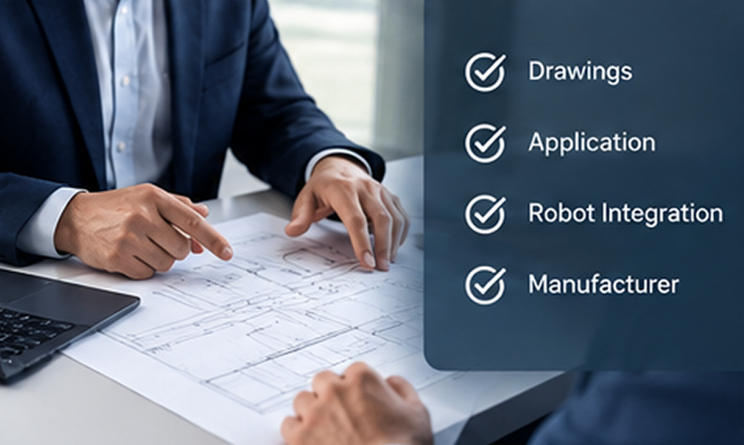
Q27. What information should I provide to get a press brake quotation?
To help us recommend a suitable machine, please provide the following information:
- Material type and grade
- Maximum material thickness
- Required bending length
- Workpiece drawings or photos
- Required bend angles and flange dimensions
- Preferred CNC controller, if any
- Destination country or port
If you are unsure about the required tonnage or machine series, that is not a problem. RAGOS can review your application details and help identify suitable options before preparing a technical quotation.
Q28. Can RAGOS evaluate my workpiece drawings before I purchase a press brake?
Yes. Providing workpiece drawings is a useful way to assess whether a proposed press brake configuration is suitable for your application.
Where available, include the material grade, thickness, overall dimensions, flange sizes, bend angles and production requirements. Our technical team can review the information, identify key machine-selection considerations and advise on a suitable configuration. Final suitability depends on the completeness of the drawings and the technical evaluation.
Q29. Can a press brake be integrated with a robot?
Robotic integration may be suitable for applications requiring repetitive bending, high production volume or reduced manual handling. However, the robot must be selected according to workpiece dimensions, material type, weight, gripping method, cycle time and required reach.
The press brake, robot, tooling, workpiece transfer and safety system must be evaluated as one integrated application. Share your workpiece drawings and production requirements so the machine and robot configuration can be assessed together.
Q30. How can I choose the right press brake manufacturer?
Compare manufacturers based on technical suitability, machine construction, component configuration, quality-control procedures, application experience and after-sales support. Review the complete specification rather than relying on price or headline tonnage alone.
For export projects, also consider communication, spare-parts arrangements, delivery commitments and technical documentation. Request a detailed quotation and clarify any differences between the proposed configurations before making your final decision.