


Category 2. Machine Dimensions & Workpiece Requirements
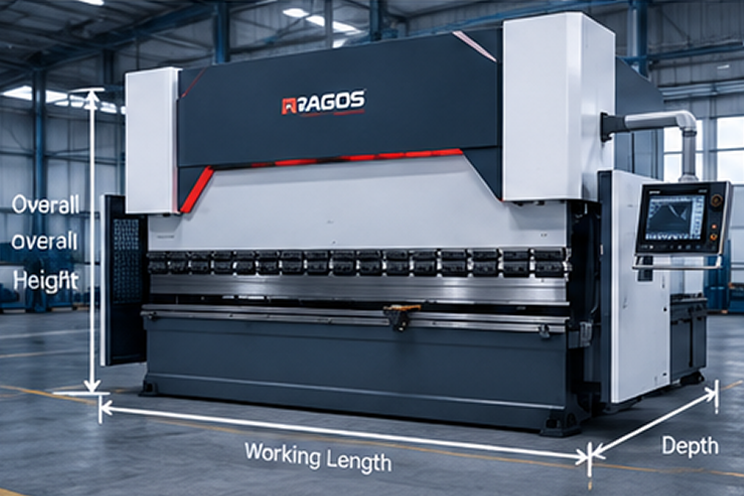
Q7. What press brake working length do I need for a 2.4-meter workpiece?
A press brake with a nominal working length of at least 2,400 mm is a reasonable starting point for a 2.4-meter bending application. However, the actual suitability depends on the workpiece geometry, bending sequence, tooling arrangement and required clearance.
You should also check the distance between the machine’s uprights, especially if the workpiece is wide or has a complex shape. If you expect to process longer parts in the future, a longer working length may offer greater flexibility.
Q8. What is the difference between a 2,500 mm and a 3,200 mm press brake?
The primary difference is the nominal working length. A 2,500 mm machine is intended for workpieces within its available bending length, while a 3,200 mm machine can accommodate longer bends, provided the workpiece and bending requirements remain within its rated capacity.
The choice should also account for installation space, handling requirements, production plans and budget. A longer machine is not automatically better if your workpieces are consistently shorter.
Q9. What is the distance between the uprights of a press brake?
The distance between uprights is the clear horizontal space between the machine’s side frames. It is different from the nominal working length and can affect how easily certain workpieces can be positioned and bent.
For large or wide components, check both measurements before purchasing. If your application requires a minimum clear distance, specify that requirement explicitly so the manufacturer can verify the proposed machine configuration.
Q10. What machine dimensions should I check before purchasing a press brake?
Important dimensions include working length, distance between uprights, throat depth, stroke, open height, table height and overall machine footprint. These measurements affect workpiece clearance, bending flexibility and installation requirements.
For international shipments, also confirm the overall packing dimensions, gross weight, crate size and loading requirements. Providing your factory layout and largest workpiece dimensions can help identify potential installation or handling constraints before delivery.